
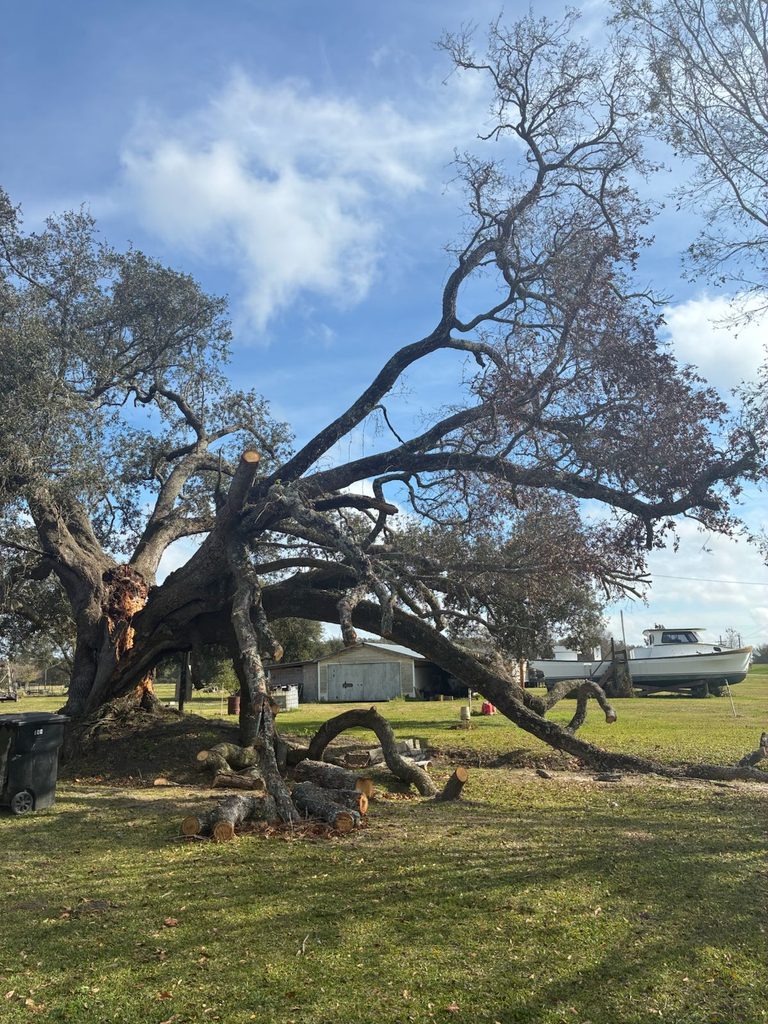
A tree leaning toward your house can be worrying, but a lean alone does not always mean it needs to come down. Some trees grow at an angle over many years. Others begin leaning because their roots or trunk can no longer hold them upright. The change in the tree’s position matters as much as its current shape. At Cajun Care Demolition & Tree Service, we provide tree services in Louisiana to help homeowners address damaged trees, unwanted growth, and storm cleanup.
Has the Tree Always Leaned This Way?
Start with what you know about the tree. Has it leaned toward the house for years, or did you notice a change after last night’s storm? Old photos may help show whether its position has changed. A leaning tree that has stood at the same angle still needs a closer look if it could hit your home. A sudden tree lean is more urgent because it may point to broken or weakened roots. Do not wait for another storm to get professional help when the change is new.
Look for Changes Around the Roots
Roots anchor a tree in the ground. When they move or fail, the soil around the trunk may change too. Cracked soil or ground lifting on one side of the tree can be warning signs, especially when they appear with a new lean. Roots that were recently cut during digging may also affect the tree’s support. Look only from a safe distance rather than walking beneath an unstable tree. Root damage can extend below the surface, so the lack of visible broken roots does not prove the tree is safe.
Check for Trunk Damage and Dead Branches
A leaning tree deserves added attention when it also has a split trunk, large dead limbs, or signs of decay. Trunk cracks may affect the parts holding the tree together. Cavities and mushrooms growing on the trunk or near its base can also call for closer inspection. These signs do not tell a homeowner exactly how much strength remains inside the wood. An arborist can check the tree’s condition and explain whether hazardous tree removal or another approach is suitable. Green leaves alone are not enough to judge the strength of the trunk and roots.
Take a New Lean After a Storm Seriously
Strong winds and heavy rain can work together to loosen a tree’s hold on the ground. After severe weather, watch for a new angle, hanging limbs, or a partly lifted root area. Keep people and pets away from a storm-damaged tree, and avoid parking beneath it. Contact a professional about emergency tree removal when the tree appears unstable. If it threatens to fall onto an occupied home, move to a safe place outside its possible fall area and call emergency services. Stay away from fallen wires and report them to the utility company.
Can Pruning Help You Keep the Tree?
In some cases, proper pruning can remove weak branches or reduce a specific risk without taking down the whole tree. But tree trimming and pruning cannot repair failed roots or make a badly damaged trunk sound again. Cutting off the top is also not a safe shortcut. This practice, called tree topping, can harm the tree and lead to weak growth and decay. Ask an arborist whether pruning, support systems, or removal fits the problem. Cables and braces may help certain trees, but they do not provide a guarantee against failure.
Plan Nearby Construction Around the Roots
Digging, driving heavy equipment over roots, and changing soil levels can damage trees that once seemed stable. If you are planning demolition in New Orleans, a new driveway, or other property work, discuss nearby trees before crews begin. A tree protection plan can help identify areas where digging and equipment traffic should be limited. Tell the tree professional about past work as well. A trench dug near the trunk or soil added around the base may help explain changes that appeared after the project was finished.
What Should a Tree Removal Estimate Include?
If removal is recommended, ask for a written description of the work. Tree removal costs can vary with the tree’s size, condition, location, and the space available for equipment. Ask whether the quote includes hauling away branches and wood, protecting nearby surfaces, and cleaning the work area. The stump may be a separate item. Our residential stump grinding services reduce unwanted stumps below ground level, but grinding does not remove the full root system. Share your plans for the space so the work can match what you want to do next.
Get Help With a Tree Leaning Toward Your Home
You do not need to decide on your own whether a leaning tree can stay. A professional inspection can help separate a long-standing growth pattern from a new problem that needs prompt action. Cajun Care Demolition & Tree Service offers [tree removal and tree care services](https://cajuncarell